
 Buy Crypto
- Markets
 Futures
- Spot
- Copy Trade
- Earn
- More
Eric Adams Denies “Rug Pull” Allegations Linked to NYC Token Despite Significant Losses

Key Takeaways:
- Eric Adams firmly denies allegations implying that money was moved out of the NYC Token.
- Market volatility during early stages is cited as a reason for the token’s price fluctuation.
- Concerns have arisen due to reported significant losses, with 60% of traders experiencing negative returns post-launch.
- The NYC Token was designed to fund nonprofit initiatives and education, rather than function as a speculative investment.
- The project’s management of liquidity and governance raises transparency and accountability issues.
WEEX Crypto News, 2026-01-15 07:31:00
The world of cryptocurrency is often fraught with controversy and speculation, particularly when new digital assets come into play. Such is the case with NYC Token, a meme coin associated with former New York City Mayor Eric Adams. Since its launch, the token has been under intense scrutiny due to accusations of suspicious liquidity activities that some have described as a “rug pull.” Despite these allegations, Adams and his team have strongly refuted any involvement or wrongdoing, aiming to clarify the situation and restore confidence among investors.
NYC Token Launch and Suspicion of Liquidity Withdrawal
In an era where crypto projects come and go with alarming regularity, the NYC Token aimed to differentiate itself by promising to support nonprofit endeavors and educational programs. However, this noble purpose faced skepticism soon after its inception. Questions were raised about unusual liquidity movements that seemed to align with a predictable downturn in the token’s market performance.
Todd Shapiro, speaking on behalf of Eric Adams, unequivocally declared reports of Adams diverting funds from the NYC Token as “false and unsupported by any evidence.” According to Shapiro’s statements, Adams did not profit from the launch nor manipulated investor funds in any way.
The token’s sharp dips in value were attributed to the inherent volatility of newly launched cryptocurrencies. This position aims to placate concerns about a deliberate “rug pull,” a term used to describe scenarios where crypto projects suddenly drain liquidity, leaving investors high and dry.
Early-Stage Volatility and Investor Losses
Shapiro’s statement emphasized that the NYC Token’s price swings were typical for a coin at an early stage. He described the movement of the token’s value as a standard reflection of market behavior rather than a consequence of strategic withdrawals. Despite these assertions, critics remain skeptical, driven by analyses from onchain data platforms and independent crypto analysts.
Complaints originated with observations from outlets such as Rune Crypto, which highlighted transactions appearing to siphon off approximately $3.4 million in liquidity shortly after the token’s market debut. This analysis fed into a broader narrative of a potential scheme designed to enrich a select few at the expense of many.
Further insight came from Bubblemaps, a platform specializing in blockchain visibility. Their findings suggested that a wallet linked with the NYC Token’s deployment withdrew about $2.5 million in USDC during a market high and subsequently reinvested $1.5 million when the token’s price had significantly diminished. Such actions created a loss-heavy environment for many investors.
Analyzing the Investor’s Predicament
Bubblemaps presented a stark picture of the financial hit experienced by investors: approximately 60% of the 4,300 individuals involved with the NYC Token found themselves in loss positions shortly after entry. The losses varied, with the majority falling under $1,000, but a noticeable minority faced substantial financial setbacks between $1,000 and over $100,000.
The impact on traders has magnified concerns relating to transparency within the project. While the NYC Token’s team has voiced their commitment to the token’s initial goals of supporting communal causes, the reality for many investors has been one of financial distress. This discrepancy between intentions and outcomes has amplified questions around governance and the management of liquidity — aspects crucial for fostering trust in any financial initiative.
Governance and Liquidity Management Concerns
The overarching issue that critics have raised regards the lack of clear oversight mechanisms. At the heart of these concerns is the question of governance within the NYC Token project. While the team has mentioned unspecified partners involved in liquidity management, specifics remain scarce.
Transparency around the distribution of funds is another bone of contention. The project’s visibility is blurred by incomplete disclosures about liquidity reserves and their usage timeline. Reportedly deployed on Solana, the token boasts a total supply of one billion, of which 70% are held in reserve, marking it as excluded from immediate circulation. However, the real-time implications of these decisions on market confidence are yet unquestioned and unraveled.
Stakeholder Expectations and the Path Forward
For Adams and his team, the imperative is to rebuild trust through enhanced transparency and tangible governance actions. Doing so will require a candid assessment of how liquidity and governance structures are communicated to the public. Increasing stakeholder engagement and creating accessible channels for investor input could mark pivotal steps toward regaining credibility.
The NYC Token’s experience serves as a teaching point for broader cryptocurrency governance lessons. In a landscape where investor trust can oscillate swiftly, ensuring that fundamentals align with transparency can spell success or failure for emerging digital currencies.
With the cryptocurrency market being as mercurial as it is, the lessons from the NYC Token saga emphasize the critical nature of communication and accountability. As the project navigates these turbulent waters, the future hinges on a careful recalibration of strategies to reinforce the trust placed in digital currencies.
FAQs
What is a “rug pull” in the context of cryptocurrency?
A “rug pull” refers to a fraudulent maneuver in crypto and decentralized finance whereby developers abandon a project and take investors’ funds. This often occurs after driving up a project’s value or liquidity, then quickly retreated, leaving investors to face a loss.
How did Eric Adams respond to the NYC Token allegations?
Eric Adams, through his spokesperson Todd Shapiro, denied any wrongdoing associated with the NYC Token. The denial focused on clarifying that no investor funds were mismanaged per their involvement, insisting that all reported liquidity maneuvers were unrelated to any profit scheme.
Why did the NYC Token experience volatility post-launch?
Volatility is characteristic of many new cryptocurrencies as they find their market value and stability. According to statements from the NYC Token team, the price fluctuations experienced early on are attributed to typical market-driven volatility, not malicious intent.
How has the community responded to the NYC Token situation?
The community response has been mixed, with many traders expressing concern over financial losses and the project’s transparency. Calls for more significant governance and clearer communication from the NYC Token team have marked a large part of the discourse surrounding recent events.
What are the future steps for NYC Token to improve their trustworthiness?
For the NYC Token and its associated investors to move forward positively, increased transparency, stakeholder engagement, and detailed communication about governance will be pivotal. Actions that align intention with clear operational oversight are crucial to re-establish trust and confidence.
You may also like
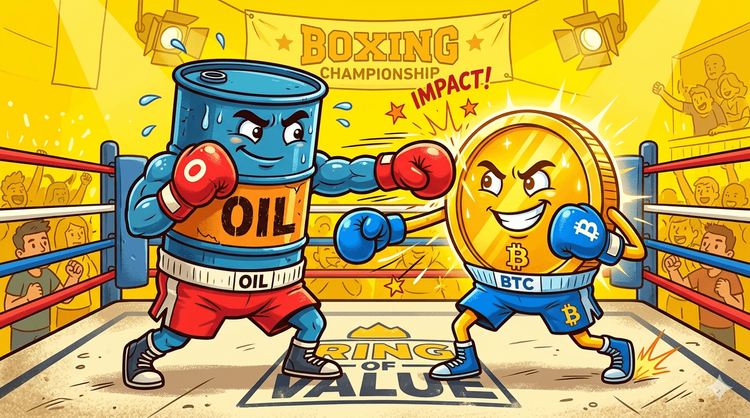
How the US-Iran War Could Affect Oil and Bitcoin Prices (Latest Analysis)
The outbreak of the US-Iran war on February 28, 2026, has provided an unprecedented real-time laboratory for understanding how geopolitical oil shocks interact with an increasingly institutionalized cryptocurrency market. This article examines the relationship between crude oil prices and Bitcoin throughout the conflict, analyzing price movements, correlation patterns, and the underlying transmission mechanisms.

OpenAI Wants to Write Its Own Rules|Rewire News Brief

Chaos Labs Exits, Who Will Pick Up Aave's Risk?
Stealthy Financial War? Iran Collects Strait Transit Fees in Stablecoin

OpenAlice: One Person, That's a Jane Street | Project Overview

The Small-Town Youth Labeling Big AI Models

Morning Report | Strategy increased its holdings by 4,871 BTC last week; Toss plans to develop its own blockchain and issue a native cryptocurrency; OpenAI's CFO privately questioned the timing of the IPO in 2026

Research: Stablecoins have a trading volume of 35 trillion a year, how much of it is real payment?

Galaxy Research: AI agents are giving rise to new species on the blockchain, how zero-human companies activate the financial flywheel

Data Research: How big is the liquidity gap between Hyperliquid and CME crude oil?
Why Are GPU Prices Skyrocketing Out of Control?

How to Master Claude Cowork Completely?

70-Page Confidential Letter Alleges First Charge of 'Lying,' Altman Tells Board 'I Can't Change My Personality'
Is Altcoin Season Starting in 2026? What Traders Should Watch Now
Altcoin season signals are becoming clearer in 2026 as capital rotation across crypto markets accelerates. Here’s what traders should watch and how strategy-based participation is evolving in the current market cycle.
Bitcoin ETF Inflows in 2026: Impact on BTC Price and Crypto Market Trends
Bitcoin ETF inflows are reshaping BTC price trends and crypto market liquidity in 2026. See how institutional capital is influencing volatility, trading behavior, and portfolio allocation strategies across crypto markets.
Visa's Stablecoin Strategy: Cards, Settlement, and the Future

Stock Market Split

How to capture the next Alpha in the narrative of predictive markets?
How the US-Iran War Could Affect Oil and Bitcoin Prices (Latest Analysis)
The outbreak of the US-Iran war on February 28, 2026, has provided an unprecedented real-time laboratory for understanding how geopolitical oil shocks interact with an increasingly institutionalized cryptocurrency market. This article examines the relationship between crude oil prices and Bitcoin throughout the conflict, analyzing price movements, correlation patterns, and the underlying transmission mechanisms.


 App
App