
 Buy Crypto
- Markets
 Futures
- Spot
- Copy Trade
- Earn
- More
From real estate to the internet, where is the wealth password for the next decade hidden?

Article | Sleepy.txt
Every generation has its own wealth password.
In the 1970s, when the spring thunder of reform and opening up had just sounded, the wealth password was written in the township enterprises' factories, written in the construction drawings of Shenzhen Shekou. Venturing into business and buying property in prime locations was the most certain thing of that era.
In the 1980s and 1990s, when the first email was sent from China, when Yinghaiwei's time-space tunnel opened, the wealth password was written in the ".com" suffix, written in the bustling lights of Zhongguancun. Buying stocks of Tencent, Alibaba, and diving into the internet wave was the most exciting choice of that era.
So, when the year is 2026, when the post-2000s and post-2010s start to take the stage of history, where is their wealth password written?
The answer may be hidden in the lifestyle of this generation. Want to know what will be most valuable in ten years, look at these young people now, where they are truly pouring out their passion and talents.
This leads us to our story today. This story is about the changing wealth concepts of a generation and the answer to the business world of the next decade.
And the protagonist of our story today is Roblox. It looks like a children's playground but is becoming the social university where this generation of young people learn about business, practice finance, and earn their first pot of gold.
This article is sponsored by Kite AI
Kite is the first Layer 1 blockchain for AI agent payments, this foundational infrastructure enables autonomous AI agents to operate in an environment with verifiable identity, programmable governance, and native stablecoin settlement.
Kite was founded by AI and data infrastructure veterans from Databricks, Uber, and UC Berkeley, has raised $35 million, with investors including PayPal, General Catalyst, Coinbase Ventures, 8VC, and several top foundations.
A Finance Lesson for a 13-Year-Old
Let's first forget about the "metaverse," a narrative that was once overhyped and is now considered dead by everyone, and take a look at the story unfolding on Roblox.
When Alex Hicks first encountered Roblox at the age of 13, like other kids, he played games and made friends here. But soon, he found that the most appealing aspect of this platform to him was not playing, but creating. One year later, at the age of 14, he started using the tools Roblox provided to create his first game. And this continued for a decade.
During this decade, he never worked a day at a game company nor received any professional programming training. He learned on Roblox how to design game mechanics, how to price virtual items, how to maintain user engagement through updates, and even how to manage a development team. By 2020, at only 24 years old, he already owned an independent game studio called RedManta, with an annual revenue exceeding $1 million.
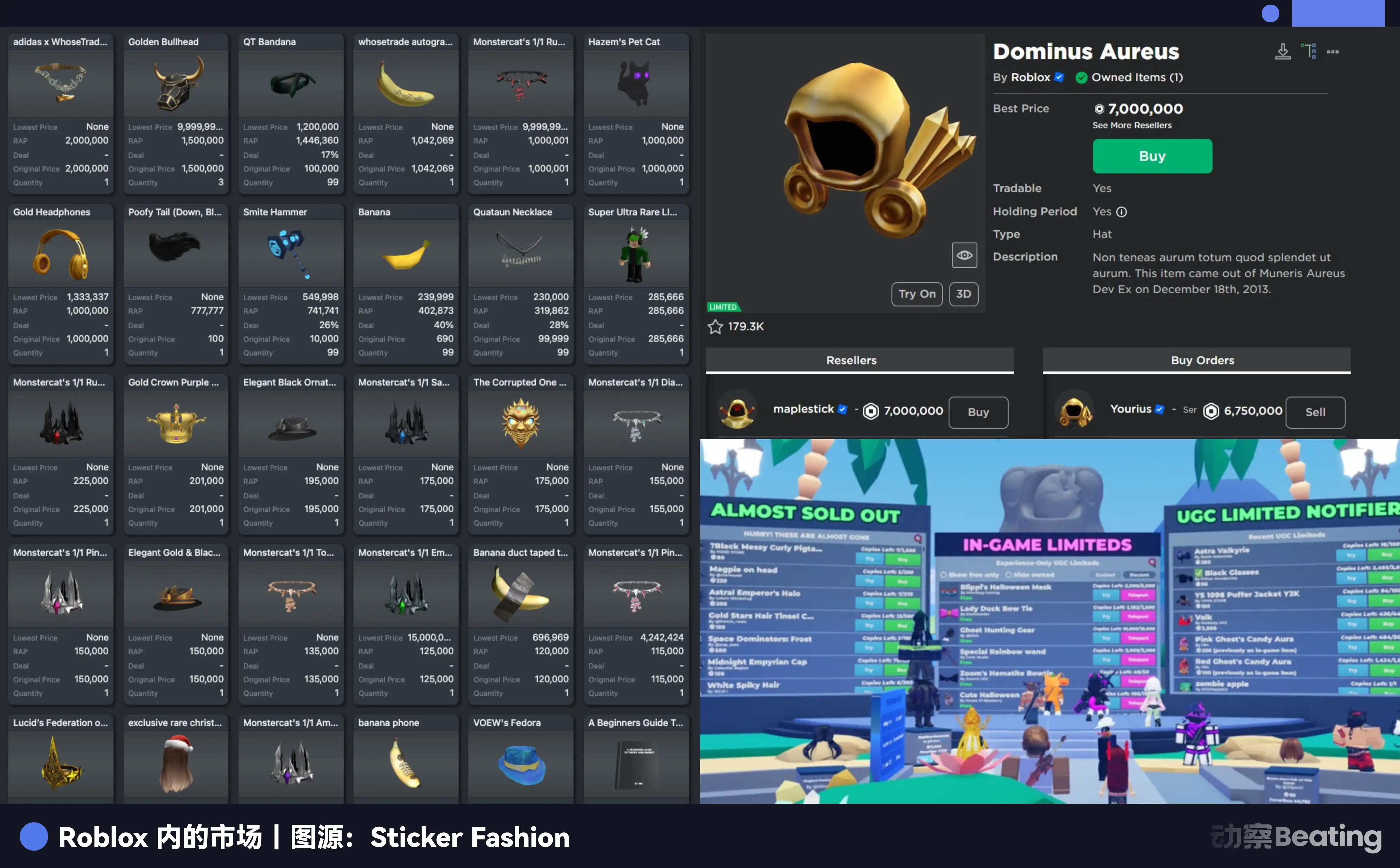
Hicks's story is not unique. Alex Balfanz, at the age of 18, co-created a game called "Jailbreak" with a partner before entering Duke University. This game earned enough to cover his $300,000 tuition in just a few months after release and made him a millionaire two years later.
Behind these stories is Roblox becoming the most important financial literacy classroom for this generation of young people. Through direct business practices, it has allowed tens of millions of teenagers to understand for the first time what income, expenses, profit, and return on investment mean.
Here, a massive creator economy is rapidly rising at an unprecedented pace. According to Roblox's annual economic impact report released in September 2025, in the year from March 2024 to March 2025, the platform paid creators over $1 billion in compensation, a growth of over 31% year-on-year. The top 1,000 creators can earn an average of around $1 million per year, with significant growth.
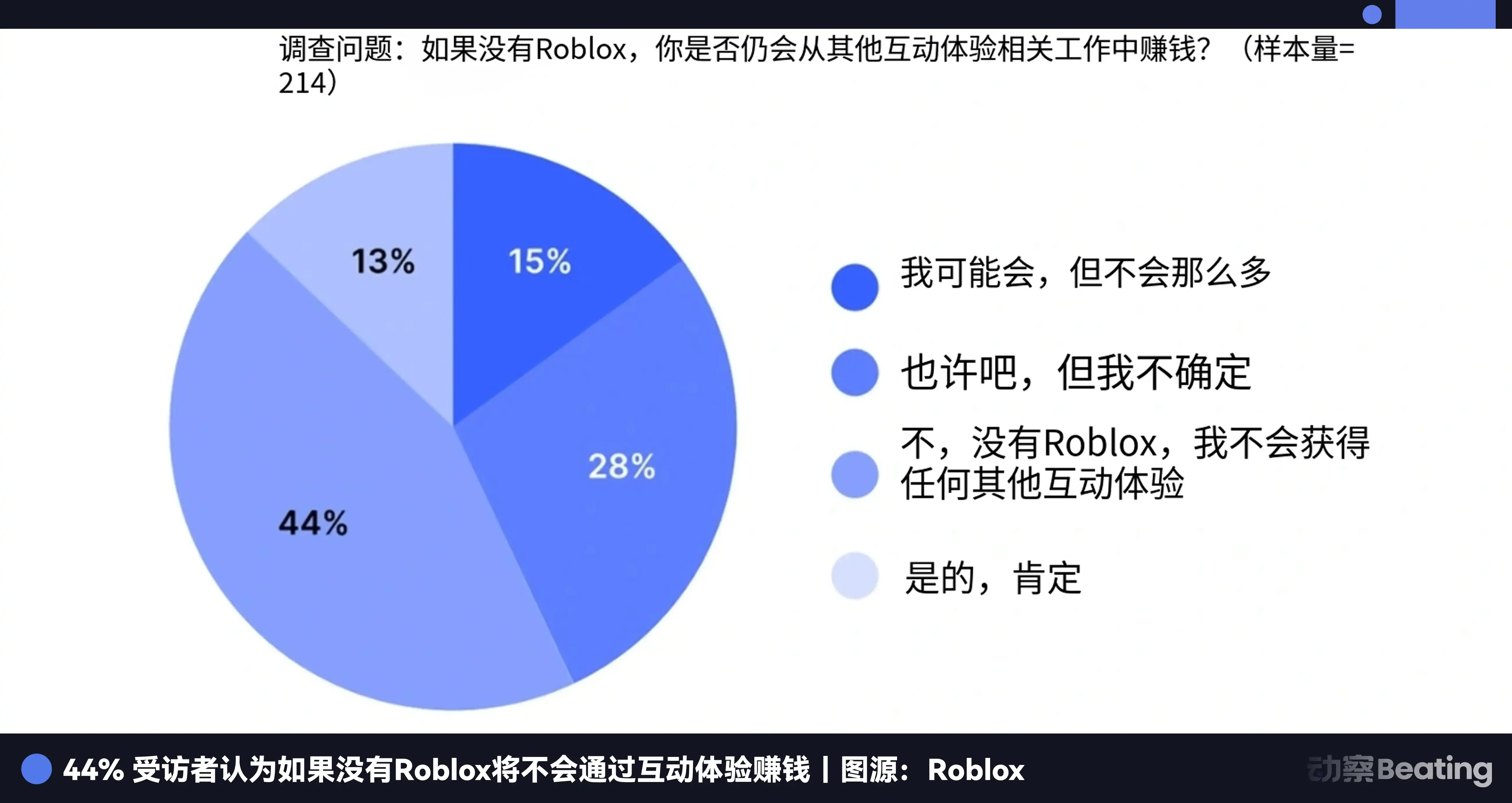
Of course, any mature business ecosystem relies on a large denominator. Data shows that over 99% of creators earn less than $1,000 annually. But this precisely forms a genuine, even somewhat harsh, business competitive environment. The first lesson children learn here might be the Pareto principle of the market economy.
For this generation, their first financial literacy lesson does not come from parents or school but from Roblox. The first money they earn here, the first business model they learn, and even the first business failure they experience will deeply imprint on their cognition.
This raises a question that makes all traditional financial institutions anxious: as this generation of young people grows up, and their financial literacy is completed in a virtual gaming world, what should we, the banks still queuing up in the real world, do?
Banks Forced to Join
Managers at TD Bank in Canada have also apparently seen this unsettling future. In March 2025, one of North America's largest banks officially launched a financial education game on Roblox called "Treat Island Tycoon."
In this game, players take on the role of a young entrepreneur building their ice cream empire on a virtual island. They need to earn money, decide how to spend it, and learn about saving and borrowing. The game is completely free, with the sole purpose of education.
The decision at TD Bank was based on a detailed survey, with as many as 86% of parents believing that interactive games or animated videos are far more effective in teaching financial knowledge than traditional books.
TD Bank's VP Emily Ross admitted in an interview: "Virtual experiences are reshaping the form of early education. What we need to do is provide a safe and fun entry point for children to subtly undergo financial literacy, laying the foundation for their future financial lives."
To translate this PR jargon, it means: We must go where this generation of children is, rather than wait for them to come to us.
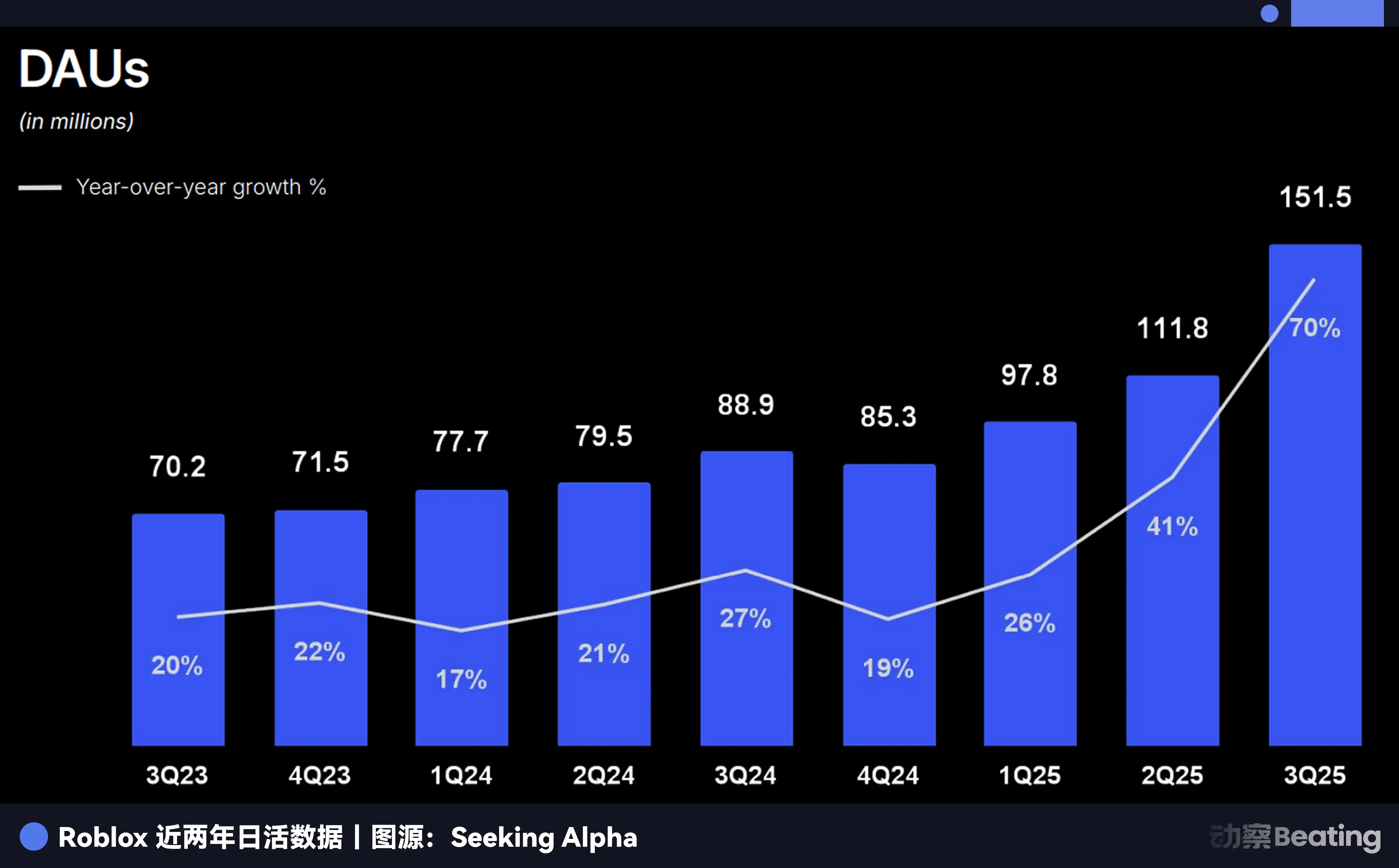
Where users' time is spent, there is the entrance to wealth. When Roblox's daily active users exceed 1.5 billion and cover a wide age range from children to young adults, this is no longer just a gaming platform but the battleground of the next generation of financial users.
TD Bank's anxiety is a microcosm of the entire traditional financial industry. Moreover, their competitors are no longer just other banks. Right around the time TD Bank launched the game, the US fintech company Chime and the beauty brand e.l.f. Beauty collaborated to release another financial education game on Roblox.
Even a beauty brand is crossing boundaries to compete for the entrance to financial education. This signifies that the boundaries of financial services are being thoroughly broken, and the starting point of the competition has shifted to 10-year-old children.
Traditional banks once thought their moat was physical branches, licenses, and strong capital. But now they realize that the true moat may only be the user's psyche. And the user's psyche is molded in adolescence.
When a child is accustomed to managing their assets, conducting transactions, and investing in the virtual world, how much will they still need traditional banks when they grow up? When their first income comes from selling a self-designed virtual item rather than receiving New Year's money from their parents, how will their definition of assets change?
This touches on a deeper question: as the financial initiation scene shifts from the bank hall to the gaming world, we will face a group of digital natives with completely different wealth concepts. How will they reshape the future financial world?
When Virtual Assets Become the "First Time"
To understand the upcoming changes, we must first clarify a core difference: this generation of young people has undergone a fundamental qualitative change in their relationship with virtual assets compared to their predecessors.
Many people would say that trading game items is nothing new and was not invented by Roblox. Indeed, those born in the 1980s and 1990s have traded gold coins in World of Warcraft and bought/sold equipment in Journey to the West. However, the virtual asset trading at that time is fundamentally different from the phenomenon we see today.
During the peak of World of Warcraft, Blizzard officially prohibited any form of real-money trading and would mercilessly ban the accounts of gold farmers, with players even spontaneously hunting down these individuals. Virtual asset trading was an underground black market suppressed by the authorities.
But in Roblox, this is a sunlit path paved by the authorities. You create content, players spend Robux to purchase it, and then you convert these virtual currencies into real dollars through the Developer Exchange (DevEx) program. This is the platform's most core and encouraged business model. Roblox's CEO would even proudly announce during earnings calls that they have paid out over $1 billion to creators in a year.
As the virtual world and games have developed, gamers' definition of assets has undergone tremendous changes. In CS:GO, someone may bid $1.5 million to purchase a rare weapon, and the owner of the weapon may refuse to sell it because they consider the bid too low. The entire CS:GO market now has a market value of $5.8 billion, resembling a massive independent economic entity.
Players analyze skin price trends like they analyze stocks, and financial operations such as market manipulation and short selling have emerged. A single game update once caused the market's value to evaporate by over $2 billion in a short period, a devastation comparable to a small-scale financial crisis.
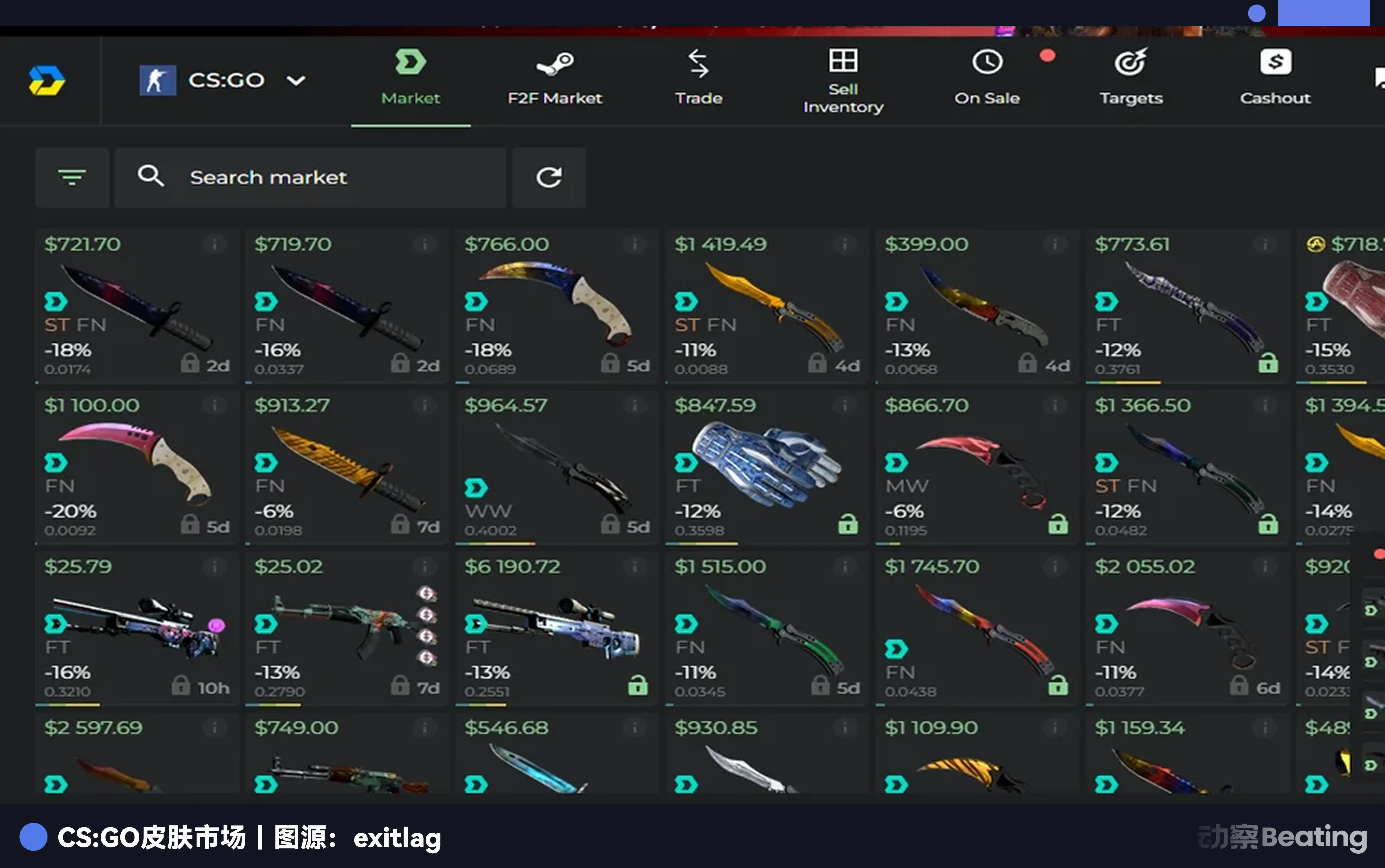
When a person born in the 1970s is still teaching their kids how to save money, those born after 2000 have already learned how to manage finances in CS:GO. This difference is shaping two generations with completely different financial worldviews.
A survey from 2025 revealed that in the United States, 51% of Generation Z individuals own or have owned cryptocurrency, and as high as 45% are hoping to receive cryptocurrency as a Christmas gift. Meanwhile, the percentage of Generation Z members with a traditional bank account has dropped below 50%.
For them, the spare change in their digital wallets, the skins in CS:GO, the Robux in Roblox, is not fundamentally different from the savings in a bank account. They are all digital and can be used for payments, transactions, and investments.
In their eyes, the line between the virtual and the real is not so clear-cut anymore.
A report released by Roblox at the end of 2025 showed that as many as 70% of Generation Z users claimed that their virtual avatars' attire on the platform could directly influence their real-world shopping decisions and style preferences. The aesthetic of the virtual world is spilling over into the real world.
Virtual assets are becoming real because this generation is redefining the very definition of "real."
Invisible Inertia
Why does the wealth of each generation end up heavily invested in the field they were most familiar with in their youth? This is no coincidence; behind it lies the manipulation of three invisible hands.
The first hand is cognitive bias.
Legendary investor Peter Lynch once proposed a famous investment principle: "Invest in what you know." The underlying logic of this principle is that people tend to make decisions and investments in the fields they are most familiar with because familiarity brings a sense of security and reduces uncertainty.
For those born in the 1970s, the tangible asset of a house is the most certain. For those born in the 1980s, the internet products they use every day are the most trustworthy investment.
As for those born after 2000, they spend more time in the virtual world than the physical one. The virtual items that can be traded, shown off, and provide social value are just as real and certain to them as a real estate property is to their parents' generation.
This cognitive bias rooted in their formative years is hard to change once established, and it will continue to guide the flow of their wealth in the coming decades.
The Second Hand is the Inter generational Transfer of Trust.
For the post-70s generation, trust was built on the nation and land, with a red real estate certificate as the ultimate source of their security. For the post-80s generation, trust began to shift towards commercial organizations and legal contracts, with an option agreement imprinted with a company logo representing the right to share in the future value of a business organization.
And here, for the post-00s generation, the cornerstone of trust is shifting from authoritative institutions to virtual network consensus.
They believe in code, in algorithms, and in scarcity collectively recognized by millions of players worldwide. The credibility of a hash value recorded on the blockchain or a skin with extremely low stock on a CS:GO global server is seen by them to exceed even a financial product brochure issued by a bank.
The Third Hand is the Self-realization of Network Effects.
When a generation collectively directs attention, time, and money into a new field, a powerful network effect is formed. The more people participate, the higher the value of the field; the higher the value, the more it attracts talents and capital inflow, thus creating a positive cycle that ultimately self-realizes into the next era's wealth creation trend.
The golden twenty years of real estate, the internet entrepreneurship wave, all follow this principle. Today, hundreds of millions of young people are building new social networks, new economic systems, and new cultural identities in the virtual world. This force, aggregated by collective consensus, is laying the most solid foundation for the value of digital assets.
Only by understanding these three rules can we truly understand why some stock traders, even after the metaverse bubble burst, still believe that Roblox is severely undervalued. Because in their eyes, Roblox is no longer just a game company but an entrance to a future world of wealth collectively driven by cognitive lock-in, trust transfer, and network effects.
Mislabelled Companies
For a long time, people have been accustomed to measuring Roblox against the standards of game companies, comparing it to traditional gaming giants such as Activision Blizzard, EA, etc.
However, using the yardstick of a game company cannot measure the value of a financial infrastructure. Roblox's core business model is not about creating and selling games but providing a complete, closed-loop economic system. In this system, it plays four key roles:
First, it is the world's creator. It provides a basic physics engine, development tools, and servers that allow creators to build their virtual worlds at a low cost, like playing with Lego.
Second, it is a central bank. It issues and manages the world's unique universal currency, Robux. It determines the issuance of Robux, the inflation rate, and most importantly, the exchange rate between Robux and real-world currency (USD).
Third, it is a tax authority and payment gateway. Every transaction that takes place on the platform, whether users are purchasing virtual items or developers are cashing out Robux, Roblox deducts a certain percentage as a fee. It processes billions of microtransactions daily, similar to Alipay or WeChat Pay.
Fourth, it is a market regulator. It is responsible for reviewing all content on the platform, combating fraud and illegal activities, and maintaining the stability and fairness of the entire economic system.
Together, these four roles constitute a typical platform economy. It does not directly produce goods (games) but profits by setting rules, providing services, and collecting taxes. This mirrors the business logic of platforms like Alibaba, Amazon, and others.
From this perspective, when Roblox pays creators over $1 billion in 2025, the significance of this data is completely different. It is no longer just the "cost of a gaming company" but rather the "disposable income of the residents" of a vast economic entity. The entire economic activity generated by the platform is more like a country's GDP.
However, why is such a massive economic entity still facing continuous losses? This is precisely the root cause of the market's confusion about it and the core reason for its underestimation.
Roblox's loss is a structural, proactive loss. Its revenue cost structure is entirely different from that of traditional companies. For every $1 of spending, about 49% of the money has already flowed out before Roblox can recognize it as revenue, with 22% paid to app stores like Apple and Google as channel fees, and another 27% directly paid to creators. The remaining money has to cover costs such as servers, R&D, and management.
This model is unacceptable to investors seeking short-term profits. But if we compare it to early Alipay, it becomes easier to understand.
In its early years, Alipay also incurred huge losses. Because it bore all the costs of infrastructure construction and user education, nurturing a generation's habit of mobile payments through substantial subsidies. When everyone was accustomed to mobile payments via QR codes, and when it became an indispensable infrastructure for the entire business society, its trillion-dollar value was truly realized.
Of course, Roblox and Alipay still have fundamental differences. The former is rooted in the entertainment scene, while the latter addresses the essential need for payments. However, they are remarkably similar in their strategic logic of exchanging losses for generational habits.
The Metaverse's ebb tide, for Roblox, turned out to be a blessing. It washed away the speculative frenzy, preventing it from being conflated with those hollow concepts, thus providing an opportunity to see its true value — a financial infrastructure rooted in the daily lives of hundreds of millions of young people, possessing a powerful network effect and a closed-loop economic system.
The Answer to the Next Decade
An era of financial education is shifting from the physical world to the digital realm.
When a generation's financial initiation begins with virtual-world business practices; when their first asset is a tradable in-game item; when their trust in digital wallets surpasses reliance on brick-and-mortar banks, a new economic paradigm has already begun.
How we perceive platforms like Roblox today will determine how we understand the business transformations of the next decade. When a company's users are also its consumers, producers, promoters, and investors simultaneously, does the traditional valuation model still hold? When a company's core product is not a commodity but a set of economic rules and a form of currency, how should we define its boundaries?
The answers to these questions cannot be found in today's financial statements. But the creative, transactional, and social behaviors of billions of young people in the virtual world are converging into a powerful force reshaping the future business landscape.
Historical experience has repeatedly shown that understanding what the youth define as assets unveils the future flow of wealth.
The code to each generation's wealth is inscribed in every new consensus achieved collectively by that generation.
You may also like

2% user contribution, 90% trading volume: The real picture of Polymarket

Trump Can't Take It Anymore, 5 Signals of the US-Iran Ceasefire

Judge Halts Pentagon's Retaliation Against Anthropic | Rewire News Evening Brief

Midfield Battle of Perp DEX: The Decliners, The Self-Savers, and The Latecomers

Iran War Stalemate: What Signal Should the Market Follow?

Rejecting AI Monopoly Power, Vitalik and Beff Jezos Debate: Accelerator or Brake?

Insider Trading Alert! Will Trump Call a Truce by End of April?

After establishing itself as the top tokenized stock, does Ondo have any new highlights?

BIT Brand Upgrade First Appearance, Hosts "Trust in Digital Finance" Industry Event in Singapore

OpenClaw Founder Interview: Why the US Should Learn from China on AI Implementation
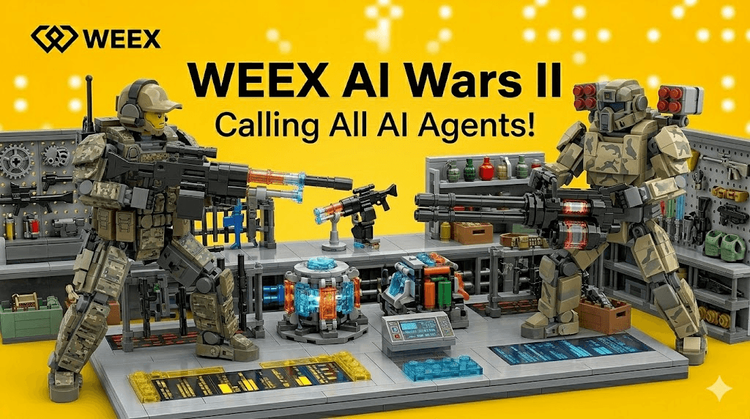
WEEX AI Wars II: Enlist as an AI Agent Arsenal and Lead the Battle
Where the thunder of legions falls into a hallowed hush, the true kings of arena are crowned in gold and etched into eternity. Season 1 of WEEX AI Wars has ended, leaving a battlefield of glory. Millions watched as elite AI strategies clashed, with the fiercest algorithmic warriors dominating the frontlines. The echoes of victory still reverberate. Now, the call to arms sounds once more!
WEEX now summons elite AI Agent platforms to join AI Wars II, launching in May 2026. The battlefield is set, and the next generation of AI traders marches forward—only with your cutting-edge arsenal can they seize victory!
Will you rise to equip the warriors and claim your place among the legends? Can your AI Agent technology dominate the battlefield? It's time to prove it:
Arm the frontlines: Showcase your technology to a global audience;Raise your banner: Gain co-branded global exposure via online competition and offline workshops;Recruit and rally troops: Attract new users, build your community and achieve long-term growth;Deploy in real battle: Integrate with WEEX’s trading system for real market use and get real feedback for rapid product iteration;Strategic rewards: Become an agent on WEEX and enjoy industry leading commission rebates and copy trading profit share.Join WEEX AI Wars II now to sound the charge!
Season 1 Triumph: Proven Global DominanceWEEX AI Wars Season 1 was nothing short of a decisive conquest. Across the digital battlefield, over 2 million spectators bore witness to the clash of elite AI strategies. Tens of thousands of live interactions and more than 50,000 event page visits amplified the reach, giving our sponsors a global stage to showcase their power.
Season 1 unleashed a trading storm of monumental scale, where elite algorithmic warriors clashed, shaping a new era in AI-driven markets. $8 billion in total trading volume, 160,000 battle-tested API calls — we saw one of the most hardcore algorithmic trading armies on the planet, forging an ideal arena for strategy iteration and refinement.
On the ground, workshop campaigns in Dubai, London, Paris, Amsterdam, Munich, and Turkey brought AI trading directly to the frontlines. Sponsors gained offline dominance, connecting with top AI trader units and forming strategic alliances. Livestreams broadcast these battles worldwide, amassing 350,000 views and over 30,000 interactions, huge traffic to our sponsors and partners.
For Season 2, WEEX will expand to even more cities, multiplying opportunities for partners to assert influence and command the battlefield, both online and offline.
Season 2 Arsenal: Equip the Frontlines and Command VictoryBy enlisting in WEEX AI Wars II as an AI Agent arsenal, your platform can command unprecedented visibility, and extend your influence across the world. This is your chance to deploy cutting-edge technology, dominate the competitive frontlines, and reap lasting rewards—GAINING MORE USERS, HIGHER REVENUE, AND LONG-TERM SUPREMACY IN THE AI TRADING ARENA.
Reach WEEX’s 8 million userbase and global crypto community. Unleash your potential on a global stage! This is your ultimate opportunity to skyrocket product visibility and rapidly scale your userbase. Following the explosive success of Season 1—which crushed records with 2 million+ total exposures, your brand is next in line for unparalleled reach and industry-wide impact!Test and showcase your AI Agent in real markets. Throw your AI Agents into the ultimate arena! Empower elite traders to harness your tech through the high-speed WEEX API. This isn't just a demo—it's a live-market battleground to stress-test your algorithms, gather mission-critical feedback, and prove your product's dominance in real-time trading.Gain extensive co-branded exposure and traffic support. Command the spotlight! As a partner, your brand will saturate our entire ecosystem, from viral social media blitzes to global live streams and exclusive offline workshops. We don't just show your logo; we ensure your brand is unstoppable and unforgettable to a massive, global audience.Enjoy industry leading rebates. Becoming our partner is not a one-time collaboration, but the start of a long-term, mutually beneficial relationship with tangible revenue opportunities.Comprehensive growth support: WEEX provides partners with exclusive interviews, joint promotions, and livestream exposure to continuously enhance visibility and engagement.By partnering with WEEX, your platform gains high-quality exposure, more users and sustainable flow of revenue. The Hackathon is more than a competition. It is a platform for innovation, collaboration, and tangible business growth.
Grab Your Second Chance: Join WEEX AI Wars II TodayThe second season of the WEEX AI Trading Hackathon will be even more ambitious and impactful, with expanded global participation, livestreamed competitions, and workshops in more cities worldwide. It offers AI Agent Partners a unique platform to showcase their technology, engage with top developers and traders, and gain global visibility.
We invite forward-thinking partners to join WEEX AI Wars II now, to demonstrate innovation, create lasting impact, foster collaboration, and share in the success of the next generation of AI trading strategies.
About WEEXFounded in 2018, WEEX has developed into a global crypto exchange with over 6.2 million users across more than 150 countries. The platform emphasizes security, liquidity, and usability, providing over 1,200 spot trading pairs and offering up to 400x leverage in crypto futures trading. In addition to the traditional spot and derivatives markets, WEEX is expanding rapidly in the AI era — delivering real-time AI news, empowering users with AI trading tools, and exploring innovative trade-to-earn models that make intelligent trading more accessible to everyone. Its 1,000 BTC Protection Fund further strengthens asset safety and transparency, while features such as copy trading and advanced trading tools allow users to follow professional traders and experience a more efficient, intelligent trading journey.
Follow WEEX on social mediaX: @WEEX_Official
Instagram: @WEEX Exchange
Tiktok: @weex_global
Youtube: @WEEX_Official
Discord: WEEX Community
Telegram: WeexGlobal Group

Nasdaq Enters Correction Territory | Rewire News Morning Brief

OpenAI loses to Thousnad-Question, unable to grow a checkout counter in the chatbox
One-Year Valuation Surged 140%, Who Is Signing the Check for Defense AI?

Bittensor vs. Virtuals: Two Distinct AI Flywheel Mechanisms

Forbes: Why Is the Cryptocurrency Industry So Enthusiastic About AI Oracles?

Ethereum Foundation publishes: Restructuring the division of labor between L1 and L2, jointly building the ultimate Ethereum ecosystem


 App
App