
 Buy Crypto
- Markets
 Futures
- Spot
- Copy Trade
- Earn
- More
Interpreting Binance’s latest investment project Perena, how to participate now?

Original title: "Binance invests in new projects, is Perena worth participating?"
Original author: shaofaye123, Foresight News
As one of the core infrastructures of the decentralized finance (DeFi) ecosystem, stablecoins have always attracted much attention.
On December 11, Binance Labs announced an investment in Quine Co., the core development team of Perena, to support its establishment of the first stablecoin infrastructure protocol on Solana.
As a core player in the stablecoin track, Tether's profit in the first half of this year was as high as US$5.2 billion, with a single-day profit of more than US$30 million. Despite the previous Luna crash, there are still many projects that persist in building in the stablecoin track.
Recently, ENA returned to 1 U, Usual rose nearly 60% in a week, and ANZ rose 3 times in one day. Stablecoins on various chains are constantly developing. This article will take you to a quick look at Perena, a project that has been favored by major VCs since its early days.
What is Perena
The current stablecoin market has a capital scale of 200 billion US dollars, and the number of new stablecoins is also increasing. Stablecoin fragmentation, isolated liquidity pools, and user experience problems are gradually emerging. Perena is committed to solving the above problems. As the infrastructure of the stablecoin track, it does not compete with USDC, PYUSD, etc., but provides them with more efficient and convenient transactions.
Perena mainly provides an efficient and flexible multi-asset stablecoin exchange platform for the Solana ecosystem, aiming to create a borderless monetary infrastructure. Since Binance announced its investment, TVL has achieved rapid growth, nearly 1 million US dollars.
The Perena team is quite strong. Perena founder Anna Yuan was the head of stablecoins at the Solana Foundation. During her tenure, she made great contributions to the increase in stablecoin issuance and the launch of non-US dollar stablecoins on Solana, doubling the issuance of stablecoins to 3.6 billion. The team also includes practitioners from institutions such as Jump Trading. In addition, the team has reached cooperation with central bank governors and regulators on stablecoin supervision.
In terms of financing, Perena has not only received support from well-known investors such as Solana co-founders Anatoly Yakovenko and Raj Gokal. It has also been favored by many institutions and has completed the Pre-Seed round of financing, led by Borderless, and investors also include Binance Labs, Primitive Crypto, Anagram, Temporal, ABCDE Labs, SevenX Ventures, etc., with a financing amount of approximately US$3 million. In addition, Perena has also reached cooperation with many DeFi protocols.
How Numéraire works
Perena has currently launched its first product, Numéraire. Numéraire is a multi-asset stablecoin exchange system that introduces the concept of USD*. It uses the AMM mechanism to achieve seamless creation and exchange of stablecoins, while optimizing liquidity and efficiency in various markets. It solves the problem of fragmentation of the stablecoin ecosystem and reduces the capital requirements for the issuance of new stablecoins. Users can mint stablecoins through the protocol, obtain returns on tokenized real-world assets, and use the layered collateralized debt position system to achieve customized risk-return configuration. However, although Numéraire claims to be a cheaper and more efficient stablecoin exchange, it is still more worn out than platforms such as Raydium due to liquidity issues.
USD* is the core element of the Numéraire system. It is a LP (liquidity provider) token that can be held and traded, and holding it will also generate potential returns. Through the concept of USD*, Numéraire not only achieves higher capital efficiency, but also has higher flexibility. All stablecoins share the same liquidity pool, reducing the fragmentation of funds. The lending function will allow excess stablecoins to be borrowed and borrowed, which can also further improve the utilization of funds. At the same time, adding stablecoins only requires establishing a relationship with USD* to exchange with all other stablecoins in the system. USD*, as an intermediate unit, can help achieve more accurate price discovery and reflect the market's real-time valuation of various stablecoins.
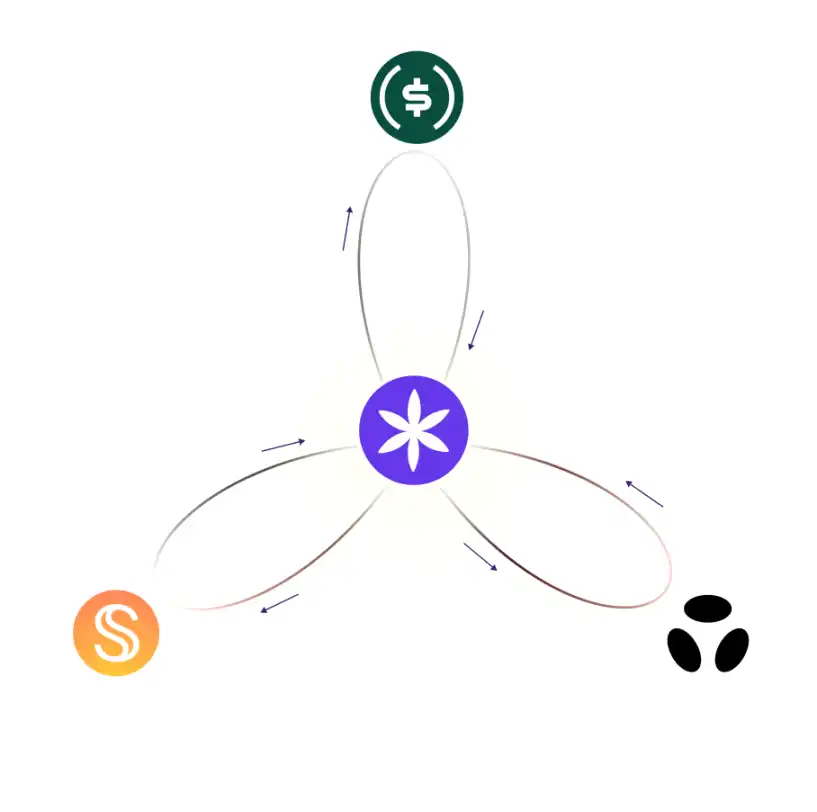
Numéraire provides the Solana ecosystem with an efficient and flexible multi-asset stablecoin exchange platform through USD*. It not only simplifies the user experience, but also provides a more efficient liquidity management solution for the DeFi ecosystem. Its advantages include:
· Integrates the dispersed liquidity among different stablecoins
· Achieve efficient price discovery and settlement mechanism
· Provide risk-return opportunities
· Scale up to meet institutional adoption and real-world needs
How to participate
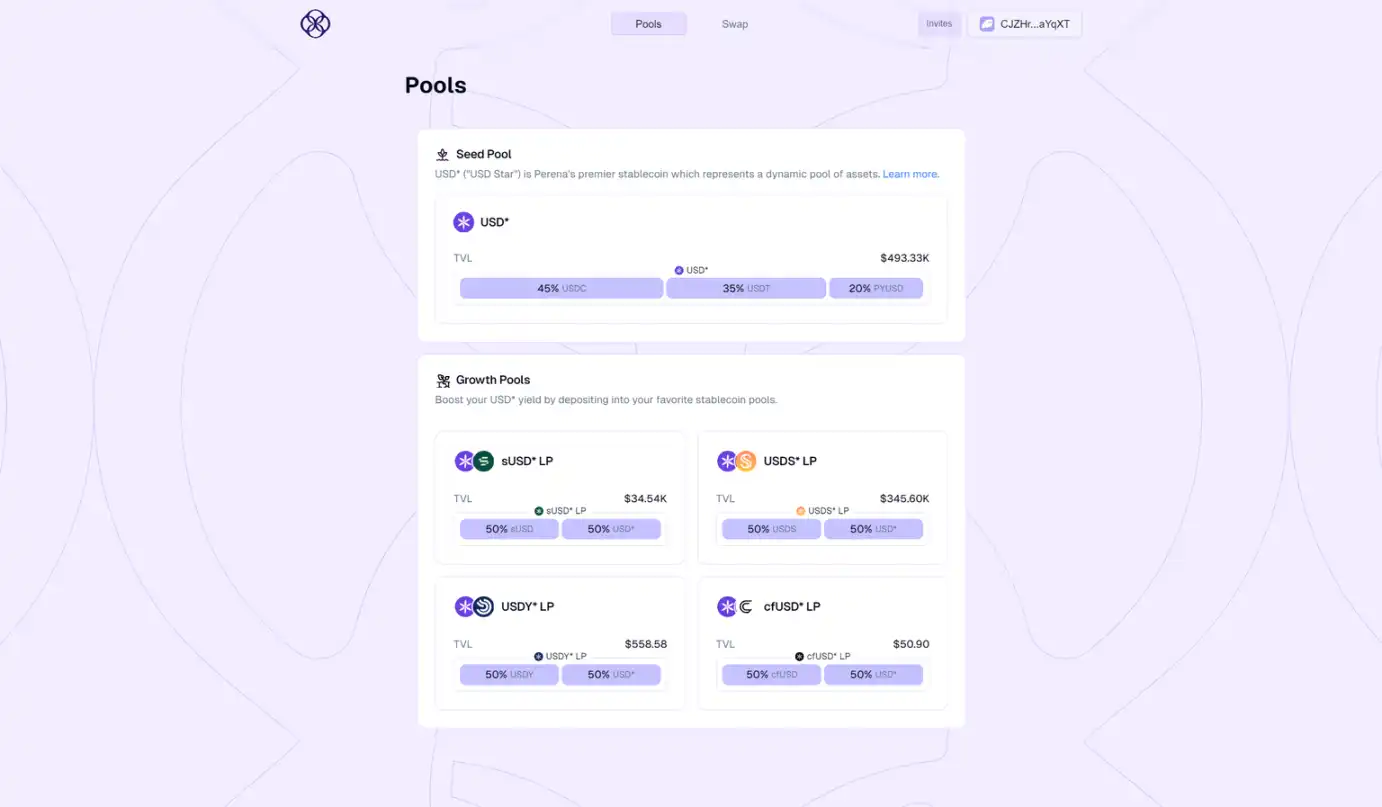
Currently, the project is still in its early stages, with only two functions, Swap and Pool, open. You can get Petal Points by trading between stablecoins and forming LPs. Swap pools do not require invitation codes to enter, and Pools require referral codes or can only be opened when the points reach 700. The referrer can get 5% of the points earned by the recommended user. When 700 points are reached, 4 invitation codes can be generated, and 2 more invitation codes can be obtained for every additional 1,000 points. Using the referral code when registering will give 100 Petal Points to the user and the referrer respectively. The Pool function is permanently enabled after entering. Currently, transactions support 7 stablecoins including USDC, PYUSD, sUSD, etc.
Daily points acquisition method:
Swap: Up to 500 points can be obtained for daily transactions.Up to 10 transactions per day, 1 USD is worth 0.1 points, and up to 50 points can be obtained for each transaction (500 U transaction amount can obtain the maximum points).
Pool: (currently there is no upper limit on points, the larger the amount, the more petal points)
-Seed Pool: 10 petal/$/day
-Growth Pool: 20 petal/$/day
USD*: 100 petal/day (balance greater than 100 USD)
Other LP tokens: 100 petal/day (balance greater than 100 USD) For example, sUSD-USD* LP, USDS-USD* LP
Perena has a beautiful vision and a luxurious investment background. However, as an on-chain stablecoin exchange platform, whether this demand really exists is still in doubt. Currently, centralized exchanges still waive transaction fees for stablecoins. Compared with on-chain trading platforms such as Raydium, Perena may need to compete with centralized exchanges. Perhaps only when on-chain funds continue to flow in, on-chain applications flourish, or are truly combined with real assets (wage issuance, etc.) can Perena play a greater role.
You may also like

Dragonfly Partners: Most agents will not engage in autonomous trading, how can crypto payments prevail?

US AI Startup Goes All In on Chinese Mega-Model | Rewire News Morning Brief

Trump Lies Again: A "Five-Day Pause" Psyop, How Wall Street, Bitcoin, and Polymarket Insiders Synced Uposciogen

When a Token Becomes Labor, People Become the Interface

Ceasefire News Leaked Ahead of Time? Large Polymarket Bets on Outcome Before Trump's Tweet

BlackRock CEO's Annual Shareholder Letter: How is Wall Street Using AI to Keep Profiting from National Pension Funds?

Sun Valley Releases 2025 Financial Report: Bitcoin Mining Revenue Reaches $670 Million, Accelerating Transformation to AI Infrastructure Platform
On March 16, 2026, in Dallas, Texas, USA, CanGu Company (New York Stock Exchange code: CANG, hereinafter referred to as "CanGu" or the "Company") today announced its unaudited financial performance for the fourth quarter and full year ended December 31, 2025. As a btc-42">bitcoin mining enterprise relying on a globally operated layout and dedicated to building an integrated energy and AI computing power platform, CanGu is actively advancing its business transformation and infrastructure development.
• Financial Performance:
Total revenue for the full year 2025 was $688.1 million, with $179.5 million in the fourth quarter.
Bitcoin mining business revenue for the full year was $675.5 million, with $172.4 million in the fourth quarter.
Full-year adjusted EBITDA was $24.5 million, while the fourth quarter was -$156.3 million.
• Mining Operations and Costs:
A total of 6,594.6 bitcoins were mined throughout the year, averaging 18.07 bitcoins per day; of which 1,718.3 bitcoins were mined in the fourth quarter, averaging 18.68 bitcoins per day.
The average mining cost for the full year (excluding miner depreciation) was $79,707 per bitcoin, and for the fourth quarter, it was $84,552;
The all-in sustaining costs were $97,272 and $106,251 per bitcoin, respectively.
As of the end of December 2025, the company has cumulatively produced 7,528.4 bitcoins since entering the bitcoin mining business.
• Strategic Progress:
The company has completed the termination of the American Depositary Receipt (ADR) program and transitioned to a direct listing on the NYSE to enhance information transparency and align with its strategic direction, with a long-term goal of expanding its investor base.
CEO Paul Yu stated: "2025 marked the company's first full year as a bitcoin mining enterprise, characterized by rapid execution and structural reshaping. We completed a comprehensive adjustment of our asset system and established a globally distributed mining network. Additionally, the company introduced a new management team, further strengthening our capabilities and competitive advantage in the digital asset and energy infrastructure space. The completion of the NYSE direct listing and USD pricing also signifies our transformation into a global AI infrastructure company."
"As we enter 2026, the company will continue to optimize its balance sheet structure and enhance operational efficiency and cost resilience through adjustments to the miner portfolio. At the same time, we are advancing our strategic transformation into an AI infrastructure provider. Leveraging EcoHash, we will utilize our capabilities in scalable computing power and energy networks to provide cost-effective AI inference solutions. The relevant site transformations and product development are progressing simultaneously, and the company is well-positioned to sustain its execution in the new phase."
The company's Chief Financial Officer, Michael Zhang, stated: "By 2025, the company is expected to achieve significant revenue growth through its scaled mining operations. Despite recording a net loss of $452.8 million from ongoing operations, mainly due to one-time transformation costs and market-driven fair value adjustments, the company, from a financial perspective, will reduce its leverage, optimize its Bitcoin reserve strategy and liquidity management, introduce new capital to strengthen its financial position, and seize investment opportunities in high-potential areas such as AI infrastructure while navigating market volatility."
The total revenue for the fourth quarter was $1.795 billion. Of this, the Bitcoin mining business contributed $1.724 billion in revenue, generating 1,718.3 Bitcoins during the quarter. Revenue from the international automobile trading business was $4.8 million.
The total operating costs and expenses for the fourth quarter amounted to $4.56 billion, primarily attributed to expenses related to the Bitcoin mining business, as well as impairment of mining machines and fair value losses on Bitcoin collateral receivables.
This includes:
· Cost of Revenue (excluding depreciation): $1.553 billion
· Cost of Revenue (depreciation): $38.1 million
· Operating Expenses: $9.9 million (including related-party expenses of $1.1 million)
· Mining Machine Impairment Loss: $81.4 million
· Fair Value Loss on Bitcoin Collateral Receivables: $171.4 million
The operating loss for the fourth quarter was $276.6 million, a significant increase from a loss of $0.7 million in the same period of 2024, primarily due to the downward trend in Bitcoin prices.
The net loss from ongoing operations was $285 million, compared to a net profit of $2.4 million in the same period last year.
The adjusted EBITDA was -$156.3 million, compared to $2.4 million in the same period last year.
The total revenue for the full year was $6.881 billion. Of this, the revenue from the Bitcoin mining business was $6.755 billion, with a total output of 6,594.6 Bitcoins for the year. Revenue from the international automobile trading business was $9.8 million.
The total annual operating costs and expenses amount to $1.1 billion.
Specifically, they include:
· Revenue Cost (excluding depreciation): $543.3 million
· Revenue Cost (depreciation): $116.6 million
· Operating Expenses: $28.9 million (including related-party expenses of $1.1 million)
· Miner Impairment Loss: $338.3 million
· Bitcoin Collateral Receivable Fair Value Change Loss: $96.5 million
The full-year operating loss is $437.1 million. The continuing operations net loss is $452.8 million, while in 2024, there was a net profit of $4.8 million.
The 2025 non-GAAP adjusted net profit is $24.5 million (compared to $5.7 million in 2024). This measure does not include share-based compensation expenses; refer to "Use of Non-GAAP Financial Measures" for details.
As of December 31, 2025, the company's key assets and liabilities are as follows:
· Cash and Cash Equivalents: $41.2 million
· Bitcoin Collateral Receivable (Non-current, related party): $663.0 million
· Miner Net Value: $248.7 million
· Long-Term Debt (related party): $557.6 million
In February 2026, the company sold 4,451 bitcoins and repaid a portion of related-party long-term debt to reduce financial leverage and optimize the asset-liability structure.
As per the stock repurchase plan disclosed on March 13, 2025, as of December 31, 2025, the company had repurchased a total of 890,155 shares of Class A common stock for approximately $1.2 million.

The US AI Startup Is Loving China's Open Source Model

Three Weeks of the US-Iran War: Who's Making Money, Who's Paying the Bill?

Interpreting Polymarket's Major Update Last Night: Fee Expansion, Self-Regulation, and New Incentives

From Human Application to Intelligent Collaboration: How GOAT Network Builds the Next Generation Digital Economy

CZ Washington Dialogue: Crypto Entrepreneurs are Accelerating Their Return to the United States

Morning Report | Strategy increased its holdings by 1,031 bitcoins last week; Katana Blockchain acquires IDEX; NYSE completes rule change to eliminate trading limits on crypto ETF options

WEEX P2P now supports JOD, USD & EUR—Merchant Recruitment Now Open
To make crypto deposits easier, WEEX has officially launched its P2P trading platform and continues to expand fiat support. We're excited to announce that the Jordanian Dinar (JOD), United States Dollar (USD ) and Euro (EUR) are now available on WEEX P2P!

Electric Capital: Tracking 501 types of yield-generating RWA assets, we discovered these patterns
Those who are cut off by AI will not disappear; they will become the creators of the next round of the economy

Stablecoins reshaping cross-border payments in Asia? Strategic panorama and investment opportunity analysis



 App
App